
Water System Inspections
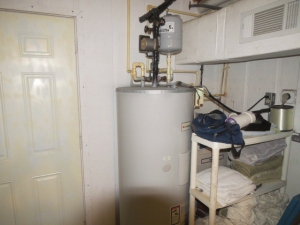
You and your families’ water quality is of the utmost importance and has a massive impact on your health and quality of life. At Coastal we have a variety of tests for your water system. There is a basic test and a more intensive second test that is sent to the County Health Department for Biological contaminates-coliform-E Coli, etc. We can also test for Chemical contaminants such as lead, nitrates, and nitrites (additional fees apply).
Our Basic Test Consists of pH
The measure of how acid or alkaline a solution is; 7.0 is neutral. pH values approaching zero indicate increasing acid strength, and values approaching 14 indicate increasing alkaline strength. EPA secondary standard: 6.5 to 8.5.
Iron (Fe²⁺ / Fe³⁺)
Expressed in parts per million. Causes stains on fixtures, dishes, and laundry. Has a disagreeable metallic taste that alters the flavor of beverages such as coffee and tea. Over 5% of the earth’s crust is iron. Iron in Solution is susceptible to oxidation and when contacted by air, precipitates as a reddish-brown floc which causes discoloration. EPA secondary standard: 0.3 mg/L (ppm) or less.
Total Dissolved Solids (TDS)
Expressed in parts per million. T.D.S. present in the water supply is a general indication of the overall quality of the water. These include dissolved organics, including naturally occurring calcium and magnesium carbonates and other salts, iron, dissolved gasses, and heavy metals such as cadmium, lead, mercury, cyanide, and other minerals. EPA secondary standard: 500 ppm or less.
Hydrogen Sulfide (H2S)
Expressed in parts per million. Sulfur gas is the result of the decomposition of underground organic deposits. Imparts a characteristic rotten egg odor and is very corrosive both in water and air. It tarnishes silverware very quickly. Desirable: not detectable (even small amounts produce odor).
Tannins (Humic Acids)
Expressed in units of color. Yellow or golden-brown colors are caused by harmless organics from peaty soil and decaying vegetation. Causes slight stains that are easily removed. Desirable: not detectable.
Hardness (CaCO3)
Expressed in grains per gallon as calcium carbonate equivalent. Dissolved calcium and magnesium in water causes soap scum or curd, leaves rings, dulls hair, clogs fabric, and spots glassware. Most prevalent reason for scaling in pipes, kettles, heaters, and boilers, which reduces heat transfer and increases costly fuel consumption. Reference: under 3.5 gpg is soft; over 7 gpg is hard and will scale fixtures and water heaters.
